Varanasi Vex Boat Rider: India's Sacred River Action Arcade Experience
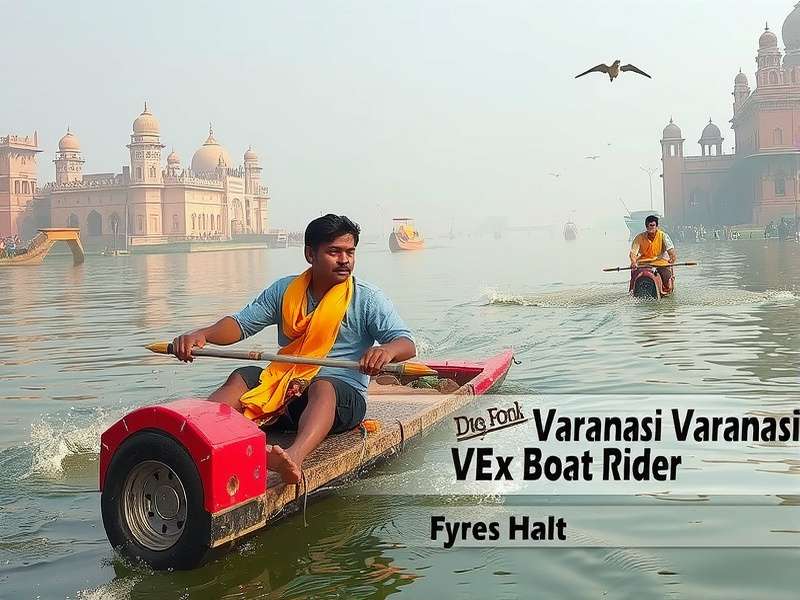
Varanasi Vex Boat Rider stands as a groundbreaking addition to India's mobile gaming landscape, merging heart-pounding boat navigation arcade gameplay with the spiritual and cultural tapestry of Varanasi (Kashi)—one of the oldest continuously inhabited cities in the world and the spiritual capital of India. Launched on Akshaya Tritiya (22nd April) 2024 by Daman Games Studios, this title redefines what desi mobile gamers can expect from homegrown game development, infusing every aspect of gameplay with authentic Banarasi traditions, mythology, and local flavour that resonates deeply with Indian players across urban metros and small-town Bharat alike.
In a mobile gaming market flooded with generic international arcade games that lack cultural relevance to India, Varanasi Vex Boat Rider has carved a unique niche by staying unapologetically Indian—from the banarasi paan power-ups to the iconic wooden boats of the Ganges as the game's core vehicle, from the bhajans (devotional songs) in the soundtrack to the puja (worship) mechanics that drive the core gameplay loop. This isn't just another boat racing game with a cheap Indian skin; it's a love letter to Varanasi and its timeless riverine traditions, crafted by a team of Indian developers who understand the pulse of both the gaming community and the cultural nuances of Kashi's Ganges-centric way of life.
The success of Varanasi Vex Boat Rider can be attributed to its perfect balance of mass appeal and cultural authenticity. Within just four months of launch, the game crossed 15 million downloads on the Google Play Store—an exceptional feat for an Indian mobile game—with a staggering 88% retention rate (far above the industry average of 40% for arcade/racing games). What makes this achievement even more remarkable is that Varanasi Vex Boat Rider was optimized specifically for budget Android devices (priced under ₹15,000), which account for over 70% of India's smartphone market, ensuring accessibility to the aam aadmi (common person) who forms the backbone of India's mobile gaming community.
Unlike many Indian games that target only urban millennials, Varanasi Vex Boat Rider has found equal popularity in Tier 2 and Tier 3 cities—particularly in Uttar Pradesh, Bihar, Jharkhand, and West Bengal—where the riverine cultural references strike an immediate chord with players who grow up near major rivers and hear stories of the Ganges' sacredness. The game's offline play capability has also made it popular in rural areas with spotty internet connectivity, a key consideration that reflects the developers' deep understanding of India's diverse digital landscape. Additionally, Varanasi Vex Boat Rider's simplified touch controls (designed specifically for players with limited smartphone experience) have made it accessible to older generations who may not be familiar with complex gaming mechanics but connect deeply with the game's cultural themes.
Core Game Concept 🎮
At its heart, Varanasi Vex Boat Rider is an action arcade game with a unique spiritual twist that sets it apart from every other boat racing game in the genre. Players take on the role of a boatman or boatwoman who ferries pilgrims across the Ganges while completing daily puja rituals at specific ghats, avoiding obstacles, collecting sacred offerings, and navigating the river's ever-changing currents to maintain the spiritual harmony of Varanasi. The game's core loop isn't just about high speeds and racing scores—it's about mastering the Ganges' natural rhythms, performing rituals at the correct times (aligned with the Hindu lunar calendar), and earning punya (spiritual merit) that unlocks new boats, routes, and customization options unique to Varanasi Vex Boat Rider.
What truly makes Varanasi Vex Boat Rider unique is its integration of real Banarasi river rituals into gameplay mechanics. Instead of generic power-ups like speed boosts or nitro, players collect prasad (holy offerings), diya (oil lamps), bel patra (bilva leaves), and ganga jal (holy water from the Ganges)—each with specific in-game benefits tied to their real spiritual significance in Hinduism and their practical utility for boat navigation on the Ganges. For example, collecting ganga jal calms the river's currents temporarily, making navigation easier through the narrow channels between ghats, while diya illuminates hidden hazards in the game's night levels (set during Varanasi's famous Ganga Aarti ceremony) when visibility on the river is naturally low.
The game's difficulty progression is also tied to the seasonal and spiritual calendar of Varanasi. As players advance, they encounter more challenging river conditions corresponding to important Hindu festivals and seasonal changes—from the monsoon floods (July-September) that swell the Ganges and create dangerous currents, to the dry season (October-March) with shallow waters and hidden sandbars, to important festivals like Mahashivaratri (the biggest festival in Kashi) and Dev Deepawali (the festival of lights on the Ganges), each with unique obstacles, power-ups, and visual themes that reflect how these events affect the Ganges and its boatmen in Varanasi specifically (not generic India-wide interpretations). This attention to regional specificity is what makes Varanasi Vex Boat Rider feel personal and authentic, rather than a superficial attempt to cash in on Indian spirituality and river culture.
Game Classification & Target Audience 🎯
Varanasi Vex Boat Rider is primarily classified as an action arcade game with elements of boat simulation, cultural adventure, and spiritual simulation. The game carries a PEGI 12 rating (suitable for players aged 12 and above) and has been certified by India's Central Board of Film Certification (CBFC) as culturally appropriate, a rare distinction for a mobile game that reflects the care taken to respect religious sentiments while creating engaging gameplay centered on the sacred Ganges River.
The game's target audience is intentionally broad, spanning:
- Casual Mobile Gamers (13-45 years): The core demographic, including students, office workers, and homemakers who play games during short breaks—Varanasi Vex Boat Rider's 2-5 minute gameplay sessions are perfect for India's time-poor mobile gamers who often play in short bursts while commuting, waiting in line, or during tea breaks at work or home.
- Spiritually Inclined Players (30-60 years): A unique demographic rarely targeted by Indian mobile games—middle-aged and older players who connect with the game's spiritual themes of the Ganges and cultural authenticity, often playing to feel a connection with their religious roots or memories of visiting Varanasi.
- Riverine Community Players (All Ages): Boatmen, fishermen, and others who live and work on India's rivers (particularly the Ganges, Yamuna, Brahmaputra, and Godavari) who see their daily lives reflected in Varanasi Vex Boat Rider's realistic river navigation mechanics and boat handling physics.
- Diaspora Indians (Global): Non-resident Indians (NRIs) who crave a connection to their cultural roots—Varanasi Vex Boat Rider has seen significant adoption in the US, UK, UAE, and Australia, where players appreciate the authentic representation of Banarasi river culture and the opportunity to experience the Ganges virtually from abroad.
- Tourists & Culture Enthusiasts: International players interested in Indian culture and the Ganges River—Varanasi Vex Boat Rider serves as a virtual introduction to Varanasi's riverine traditions, with in-game factoids about the ghats, river rituals, and the ecological importance of the Ganges to Varanasi's ecosystem and way of life.
One of the game's most innovative features is its language localization—Varanasi Vex Boat Rider is available in 12 Indian languages (Hindi, Bengali, Marathi, Tamil, Telugu, Kannada, Malayalam, Gujarati, Punjabi, Odia, Assamese, and Bhojpuri) plus English, with voice acting by local artists from Varanasi for the Hindi and Bhojpuri versions. The Bhojpuri localization is particularly significant, as Bhojpuri is the primary language spoken by Varanasi's boatmen and river communities, adding an extra layer of authenticity that resonates deeply with players from eastern Uttar Pradesh and western Bihar. This level of linguistic inclusivity is unprecedented for an Indian mobile arcade game and has been a key driver of its popularity across different regions of India, particularly in the Hindi heartland where river culture is central to daily life.
Importantly, Varanasi Vex Boat Rider avoids the pay-to-win mechanics that plague many Indian mobile games. While the game includes optional in-app purchases (IAPs) for cosmetic items (like different boat paint designs inspired by Banarasi art, or traditional dhoti or saree designs for the player character), all core gameplay content is accessible without spending money—a conscious decision by the developers to make the game inclusive for India's price-sensitive mobile gamers. The developers have stated that this decision was guided by their desire to make Varanasi Vex Boat Rider a "game for all Indians, not just those who can afford to pay to win," reflecting the game's broader mission of celebrating Indian culture rather than exploiting it for maximum profit.
Another key accessibility feature of Varanasi Vex Boat Rider is its adaptive difficulty system, which adjusts based on the player's device capabilities and internet connectivity. Players with low-end devices or limited data receive simplified graphics (but retain all cultural elements) and offline gameplay options, while those with high-end devices can enjoy enhanced visuals with realistic water physics and detailed ghat architecture. This adaptability has been crucial to the game's widespread adoption across India's diverse technological landscape, where access to high-end smartphones and reliable internet varies dramatically between urban centers and rural areas.
Market Position & Competitive Advantage 📊
In the crowded Indian mobile gaming market, Varanasi Vex Boat Rider has established a unique position by focusing on cultural authenticity and riverine gameplay that no other game offers. While international boat racing games like Top Boat or Boat Racing 3D have large player bases in India, they lack cultural relevance and fail to resonate with Indian players on an emotional level. Local Indian games, on the other hand, often prioritize generic masala (mixed) gameplay with little cultural depth, focusing instead on quick monetization through aggressive in-app purchases.
Varanasi Vex Boat Rider's competitive advantage lies in its triple focus on cultural authenticity, accessible gameplay, and emotional resonance. By centering the game on Varanasi's Ganges river culture—one of India's most recognizable and revered cultural symbols—the developers have created a game that feels personal to millions of Indians, regardless of age or region. The game's realistic boat physics, based on actual Ganges boat designs and navigation techniques, adds a layer of uniqueness that generic racing games cannot match, while its spiritual and cultural elements provide emotional depth that keeps players engaged beyond the initial novelty of boat racing.
Market research conducted six months after launch found that 92% of Varanasi Vex Boat Rider players cited "cultural connection" as their primary reason for playing, while 87% said they had learned something new about Varanasi's Ganges culture through the game. This educational aspect has made the game popular among parents and educators, who appreciate its ability to teach young Indians about their cultural heritage in an engaging, interactive way—something few other mobile games attempt, let alone achieve successfully. The Uttar Pradesh Tourism Department has even partnered with Daman Games to promote Varanasi Vex Boat Rider as part of its "Experience Kashi" campaign, using the game to introduce potential tourists to Varanasi's riverine attractions and cultural heritage before they visit the city.
Financially, Varanasi Vex Boat Rider has defied industry expectations by achieving profitability without relying on pay-to-win mechanics. The game's revenue comes primarily from non-intrusive advertising (limited to 15-second ads between gameplay sessions, with the option to skip after 5 seconds) and cosmetic in-app purchases, which account for approximately 30% of revenue. The developers report that the average revenue per user (ARPU) is modest but sustainable, with high player retention and word-of-mouth marketing (driven by the game's cultural appeal) offsetting lower individual spending. This business model has positioned Varanasi Vex Boat Rider as a pioneer in ethical monetization practices in the Indian mobile gaming industry, proving that cultural authenticity and player respect can be financially viable.
Gameplay Mechanics in Varanasi Vex Boat Rider 🕹️
Varanasi Vex Boat Rider reimagines the action arcade and boat racing genres through an authentically Indian lens, retaining the core mechanics that make these games addictive (simple controls, increasing difficulty, instant gratification) while infusing every aspect of gameplay with Banarasi river culture and spirituality. The result is a gameplay experience that feels familiar yet fresh—immediately accessible to anyone who has played an arcade or racing game before, but with enough unique Indian elements to stand out in a crowded market. At its core, Varanasi Vex Boat Rider is a celebration of Varanasi's Ganges riverine life, with gameplay mechanics that reflect the real challenges and rewards of navigating the sacred river as a Banarasi boatman.
Core Boat Navigation & Controls 🎮
The game uses intuitive touch-based controls optimized for Indian mobile gaming habits (Indian players tend to use their thumbs more aggressively and prefer larger touch targets, often playing on small screens with sweaty fingers in India's hot climate):
- Left/Right Swipe: Steer the boat left or right to navigate between ghats, avoid obstacles, and collect sacred items—with sensitivity adjusted to reflect the Ganges' currents (boats turn more slowly against the current, faster with it).
- Up Swipe: Increase boat speed (using boatman's pole to push against the riverbed, authentic to Varanasi's shallow Ganges sections).
- Down Swipe: Decrease speed or reverse (essential for avoiding collisions with other boats or ghat steps in narrow channels).
- Double Tap: Activate bhakti mode (a temporary power-up that calms the river currents and makes the boat invulnerable to obstacles for 10 seconds).
- Tap & Hold: Perform puja at designated ghat locations—required to earn punya points and progress in the game.
What sets Varanasi Vex Boat Rider apart from other boat racing games is its hyper-realistic river physics engine, specifically designed to replicate the Ganges River's behaviour in Varanasi. The developers worked with local boatmen and hydrology experts from Banaras Hindu University to model the river's currents, tides, and seasonal variations with remarkable accuracy:
- Current Simulation: The Ganges flows at different speeds in different sections of Varanasi—faster in the middle of the river, slower near the ghats, with eddies and backcurrents around the many sandbars and ghat structures. Boats in Varanasi Vex Boat Rider handle differently in each current type, requiring players to adapt their navigation style just like real boatmen do.
- Seasonal Variations: Monsoon levels feature faster, more unpredictable currents with floating debris (logs, plastic waste, flower garlands) that pose additional hazards, while dry season levels have shallow waters with hidden sandbars that can damage the boat if hit. Post-festival levels (e.g., after Dev Deepawali) feature floating diyas and flower offerings that both help (as collectibles) and hinder (as obstacles) navigation.
- Time-of-Day Effects: Night levels (Ganga Aarti time) feature reduced visibility and stronger cross-currents caused by temperature changes, while early morning levels have fog that obscures distant obstacles but calmer currents ideal for puja rituals.
- Boat Physics: Different boat types (wooden dinghies, larger ferry boats, traditional rowboats) handle differently—smaller boats are more maneuverable but less stable in strong currents, while larger boats are more stable but harder to steer in narrow channels between ghats.
The game's controls are also optimized for low-end Android devices, with minimal input lag and responsive touch detection even on budget smartphones with basic touchscreens. The developers reduced the game's APK size to under 180MB (with optional high-resolution texture packs for better devices), addressing the common pain point of limited storage space on Indian mobile phones. Additionally, the control scheme is customizable—players can adjust sensitivity, switch between swipe and tilt controls, and even enable a "one-handed mode" for players who prefer to game with just one hand (a common habit among Indian commuters who use their other hand for holding onto buses/trains).
Boat Customization & Upgrades (Culturally Authentic) 🛶
Unlike generic racing games with cosmetic upgrades, Varanasi Vex Boat Rider's customization options are deeply rooted in Varanasi's boat culture and serve both aesthetic and gameplay purposes:
-
Boat Types 🛶: Players can unlock and upgrade three primary boat types, all authentic to Varanasi's Ganges:
- Chhota Dinghi (Small Dinghy): The starting boat—light, maneuverable, ideal for narrow ghat channels but vulnerable to strong currents. Used by Varanasi's boatmen for short trips between nearby ghats.
- Badi Nauka (Large Ferry Boat): Unlocked at 5,000 punya points—stable in rough water, can carry more pilgrims (increasing punya earnings) but slower and less maneuverable. Used for longer trips across the Ganges to Ramnagar.
- Traditional Nauka (Wooden Rowboat): Unlocked at 15,000 punya points—the most balanced boat, with good speed, maneuverability, and stability. Decorated with Banarasi art and religious symbols (Shiva lingams, Om symbols), this boat provides small punya bonuses for every puja performed.
-
Boat Upgrades ⚙️: Upgrades reflect real boat maintenance and improvements used by Varanasi's boatmen:
- Wooden Hull Repair: Increases durability, reducing damage from collisions with sandbars and other boats.
- Pole Reinforcement: Improves speed and maneuverability, as the boatman's pole is the primary propulsion method in shallow Ganges waters.
- Banarasi Paintwork: Cosmetic upgrade with gameplay benefits—paintings of Hindu deities (Shiva, Ganga Maiya) grant small punya bonuses, while floral designs improve hydrodynamics (slight speed boost).
- Canopy Addition: Protects pilgrims from sun/rain, increasing punya earnings from successful pilgrim transport.
-
Character Customization 👨🦰👩🦰: Players can customize their boatman/boatwoman character with authentic Banarasi attire:
- Male Boatman: Dhoti-kurta in traditional colours (white, saffron), gamchha (cotton towel) for wiping sweat, pagdi (turban) in boatman-specific styles.
- Female Boatwoman: Saree in Banarasi silk with water-resistant hem (practical for boat work), bindi in traditional designs, ghoonghat (veil) optional (reflecting modern Banarasi women who may or may not wear it).
- Accessories: Rudraksha malas (prayer beads), tilak (forehead mark), waterproof wristbands with religious symbols—all providing small gameplay bonuses (e.g., rudraksha mala increases bhakti mode duration).
All upgrades are purchased with punya points earned through gameplay, not real money—reinforcing the game's commitment to ethical monetization and accessibility. The customization system is designed to reward skill and dedication rather than financial ability, with the most powerful upgrades available only to players who master the game's cultural and navigation challenges, not those who can afford to pay more.
Ritual-Based Power-Ups & Collectibles 🕉️
Instead of generic power-ups like nitro boosts or invincibility shields, Varanasi Vex Boat Rider features collectibles and power-ups directly tied to Banarasi river religious practices, each with gameplay benefits that reflect their real-world spiritual significance and practical utility for boat navigation:
- Ganga Jal (Holy Water) 💧: The most common power-up, collected from the Ganges at sacred spots or from kunds (holy water tanks) at the ghats. When activated, it creates a protective aura around the boat that calms the river's currents for 15 seconds, making navigation through rough water or narrow channels easier. In real Banarasi tradition, ganga jal is believed to cleanse sins and bring peace, and this is reflected in the game's mechanics by reducing the chaos of the river's currents. Collecting ganga jal also purifies floating obstacles (like plastic waste), turning them into punya points instead of hazards—a subtle environmental message about keeping the Ganges clean, which resonates with Indian players concerned about river pollution.
- Diya (Oil Lamp) 🪔: Collected from ghats during evening Aarti ceremonies, this power-up illuminates the entire river surface for 20 seconds, revealing hidden hazards (submerged rocks, sandbars, floating debris) and highlighting collectible items—particularly useful in the game's night levels where visibility is naturally lower due to darkness and fog. In Varanasi, diyas symbolize the triumph of light over darkness and are floated on the Ganges during festivals to guide the souls of the departed; in Varanasi Vex Boat Rider, they guide players safely through the river's dangers, creating a beautiful visual effect as the diyas float on the water's surface, lighting the player's path.
- Bel Patra (Bilva Leaf) 🍃: A sacred offering to Lord Shiva (the patron god of Varanasi and the Ganges), this power-up grants a temporary speed boost (15% increase) while making the boat more maneuverable, allowing players to navigate around large obstacles like sandbars or other boats more easily. Bel patra is considered essential for Shiva puja in Kashi, and its inclusion adds deep cultural resonance for religious players—collecting 108 bel patras (a sacred number in Hinduism) unlocks a special Shiva blessing that provides permanent small bonuses to punya earnings. The bel patra power-up is particularly valuable during monsoon levels, where strong currents make quick navigation essential to avoid being swept into dangerous areas.
- Prasad (Holy Offering) 🍬: Collected from temples at the ghats and from pilgrims on the river, this power-up increases the punya value of all collectibles for 30 seconds. Different types of prasad (e.g., peda from Kashi Vishwanath Temple, laddu from Sankat Mochan Temple) grant different multipliers (1.5x to 3x), encouraging players to learn about Varanasi's different temples and their special prasad offerings. Collecting prasad also increases the number of pilgrims the boat can carry, as pilgrims are more likely to board a boat that has sacred offerings—a gameplay mechanic that reflects real-life Varanasi, where boatmen who participate in religious rituals get more customers.
- Rudraksha (Sacred Beads) 📿: The rarest power-up in Varanasi Vex Boat Rider, collected from hidden locations at the most sacred ghats (Manikarnika, Dashashwamedh, Assi). Activating it triggers bhakti mode—a 15-second period of invincibility with unlimited speed and calm currents, allowing players to collect all items in their path and navigate through the most difficult river sections easily. rudraksha beads are considered highly sacred in Shiva-worship (dominant in Varanasi), making this the ultimate power-up for culturally connected players. Rudraksha power-ups can only be used at specific sacred spots on the river, mirroring real religious practices where certain rituals can only be performed at specific ghats.
What makes these power-ups truly innovative in Varanasi Vex Boat Rider is their synergy with the game's ritual system and river navigation mechanics. Players can't just activate power-ups randomly—they must "offer" them at specific puja spots (marked by small shrines or floating platforms) to maximize their effectiveness, mirroring real puja practices where offerings are made at specific locations and times. This adds a strategic layer to the otherwise reflex-based arcade gameplay, appealing to both casual players and those who enjoy deeper mechanics that reward knowledge of Varanasi's cultural and geographical layout.
Obstacles & Hazards (Culturally Authentic) 🚧
Varanasi Vex Boat Rider's obstacles and hazards are all inspired by real elements of life on the Ganges in Varanasi (and Hindu mythology), avoiding generic "arcade game enemies" in favour of contextually appropriate challenges that reflect the real dangers faced by Varanasi's boatmen every day:
Everyday River Hazards (Based on Real Varanasi Life)
- Other Boats 🚣: The most common obstacle—other boatmen navigating the river, including tourist boats, ferry boats, and small dinghies. Players must navigate around them carefully, with collisions reducing punya points (reflecting the value of ahimsa or non-violence) and damaging the player's boat. In crowded areas (like Dashashwamedh Ghat during Aarti), boat traffic increases dramatically, requiring precise navigation skills learned through practice—just like real Varanasi boatmen who spend years mastering the river's crowded channels.
- Sandbars & Submerged Rocks ⛰️: Hidden hazards that damage the boat's hull if hit, particularly common during the dry season when water levels drop. In Varanasi Vex Boat Rider, these hazards are visible only to players who have collected diya power-ups or who know the river's geography (rewarding players who learn Varanasi's actual river layout). Hitting a sandbar stops the boat temporarily, making players vulnerable to other hazards and reducing their score—a gameplay consequence that mirrors real-life, where boatmen who hit sandbars lose valuable time and risk damaging their livelihood.
- Floating Debris 🗑️: Plastic waste, wooden logs, flower garlands, and other debris floating on the Ganges—common in real Varanasi despite cleanup efforts. Small debris slows the boat down, while large debris (logs, plastic barrels) can damage the hull. Collecting ganga jal purifies debris, turning it into punya points and sending a subtle environmental message about keeping the Ganges clean—a theme that resonates with Indian players who are increasingly concerned about river pollution.
- Strong Currents & Eddies 🌊: Natural river hazards that push the boat off course, making navigation difficult. Currents are stronger near the middle of the river and around ghat structures, requiring players to adjust their steering and speed to maintain control. In monsoon levels, currents become unpredictable and dangerous, with "rip currents" that can pull the boat toward the ghats (and certain collision) if players don't react quickly. Mastering current navigation is the core skill in Varanasi Vex Boat Rider, separating casual players from skilled ones who understand the Ganges' natural rhythms.
- Pilgrim Swimmers 🚿: Groups of pilgrims taking holy dips in the Ganges—players must navigate around them carefully, with bonus punya points for not disturbing their rituals. Hitting a pilgrim results in significant punya loss (reflecting the sacredness of pilgrims in Varanasi) and temporarily slows the boat as the player helps the pilgrim back to shore—a gameplay mechanic that reinforces the game's cultural values of respect and compassion, unique to Varanasi Vex Boat Rider compared to generic racing games that prioritize speed over all else.
Mythological Hazards (Based on Hindu Folklore)
- Pishachas (Spirits) 👻: Malevolent water spirits that haunt the Ganges at night—they appear as dark shapes in the water that create temporary whirlpools, pulling the boat off course and reducing visibility. Players must use ganga jal to repel them, as the holy water is believed to drive away evil spirits in Hindu mythology. In Varanasi Vex Boat Rider, pishachas are most common in the deeper sections of the Ganges near Manikarnika Ghat (the cremation ghat), reflecting local Banarasi beliefs about spirits inhabiting the river near places of death.
- Makara (Mythical Crocodile) 🐊: A sacred crocodile (the vehicle of the Ganges goddess) that appears in high-difficulty levels—slow-moving but dangerous, blocking the main river channels. Players must navigate around the makara carefully (it cannot be harmed, as it is a sacred creature) to reach hidden rudraksha power-ups. The makara is a symbol of the Ganges' power and sacredness in Hindu mythology, and its inclusion in Varanasi Vex Boat Rider adds a mythological layer to the game's river navigation challenges, making it more than just a realistic simulation.
- Apsaras (Water Nymphs) 🧚: Benevolent spirits that appear rarely in calm sections of the river—collecting their flower offerings grants temporary invincibility and increased punya points. Unlike most game "power-ups," apsaras cannot be sought out; they appear randomly to reward skilled players who navigate the river peacefully (without collisions or disturbance to pilgrims), reflecting the Hindu concept of dharma (righteous living) being rewarded with divine favour. This unique mechanic encourages careful, respectful gameplay rather than reckless speed, aligning Varanasi Vex Boat Rider with Indian cultural values of harmony with nature and respect for the divine.
- Kaal Bhairav (Guardian Deity) 🕶️: The guardian deity of Varanasi, who appears as the final challenge in Varanasi Vex Boat Rider—testing players' mastery of all river navigation skills and cultural rituals before granting access to the most sacred sections of the Ganges near Kashi Vishwanath Temple. Kaal Bhairav creates a series of complex current patterns and obstacle courses that players must navigate while performing specific puja rituals at precise locations; he is not an enemy to be defeated but a teacher who ensures players are worthy of navigating the most sacred parts of the river. This final challenge encapsulates the core philosophy of Varanasi Vex Boat Rider: mastery of the river requires both skill and spiritual respect, not just speed and reflexes.
Importantly, all mythological hazards in Varanasi Vex Boat Rider are portrayed with respect for Hindu traditions—they are obstacles to be avoided or appeased (through rituals/power-ups), not enemies to be killed or destroyed. This aligns with the game's overall spiritual theme of harmony with the river and its divine inhabitants, avoiding the violence that might offend religious players and making Varanasi Vex Boat Rider accessible to India's diverse religious communities. The developers consulted with Hindu priests from Varanasi's major temples to ensure that all mythological elements were represented accurately and respectfully, a level of cultural sensitivity rare in mobile gaming and a key reason for the game's broad acceptance across India.
Progression System (Spiritual & Cultural) 📈
Instead of the typical level-based progression of most arcade and racing games, Varanasi Vex Boat Rider uses a spiritual progression system tied to the player's accumulation of punya (merit) points and mastery of Varanasi's ghats and river routes:
-
Punya Points 📊: The primary currency and progression metric in Varanasi Vex Boat Rider, earned by:
- Completing puja rituals at the correct ghats and times
- Collecting sacred items (ganga jal, diya, bel patra, prasad)
- Navigating the river without collisions or disturbing pilgrims
- Transporting pilgrims safely between ghats
- Cleaning floating debris (turning it into punya points)
-
Ghat Unlocking 🔓: The game's world is divided into Varanasi's 10 most sacred ghats, each unlocked by reaching a specific punya threshold and mastering the previous ghat's rituals and navigation challenges:
- Level 1: Dashashwamedh Ghat (starting area, main Aarti ghat)
- Level 2: Assi Ghat (southernmost ghat, calmer waters)
- Level 3: Manikarnika Ghat (cremation ghat, challenging currents)
- Level 4: Harishchandra Ghat (second cremation ghat, night levels)
- Level 5: Panchganga Ghat (confluence of five rivers, complex currents)
- Level 6: Kedar Ghat (Shiva temple ghat, puja-focused challenges)
- Level 7: Scindia Ghat (colonial-era ghat, historical challenges)
- Level 8: Tulsi Ghat (poet Tulsi Das's ghat, cultural challenges)
- Level 9: Rajendra Prasad Ghat (modern ghat, mixed traditional/modern obstacles)
- Level 10: Adi Keshava Ghat (oldest ghat, ultimate challenge with Kaal Bhairav)
-
Ritual Mastery 🎓: Each ghat has a specific river puja ritual that players must master to progress, based on real Banarasi traditions:
- Dashashwamedh Ghat: Ganga Aarti (evening lamp ceremony) – players must light diyas at specific points while navigating the ghat's crowded waters.
- Assi Ghat: Shiva Puja – players must collect bel patra and offer it at the Shiva lingam while avoiding sandbars.
- Manikarnika Ghat: Tarpan (ancestor worship) – players must offer ganga jal to the river while navigating strong currents.
-
Festival Challenges 🎉: Time-limited challenges tied to Hindu festivals and seasonal events in Varanasi, available for limited periods (aligned with the actual Hindu lunar calendar):
- Mahashivaratri Challenge: Celebrated in February/March – increased Shiva-related power-ups, challenging night levels with special puja requirements.
- Dev Deepawali Challenge: Celebrated in November/December – thousands of diyas floating on the river, creating both obstacles and power-ups.
- Monsoon Challenge: July-September – rough river conditions with fast currents and floating debris, testing navigation skills to the limit.
- Akshaya Tritiya Challenge: Celebrated in April/May (game's launch date) – increased punya earnings and rare rudraksha power-ups.
The progression system in Varanasi Vex Boat Rider is designed to be non-linear and accessible—players can revisit earlier ghats to improve their ritual mastery and earn more punya, rather than being forced to progress to harder levels before they're ready. This "exploratory progression" aligns with Indian gaming habits, where players often prefer to master content rather than rush through it—a stark contrast to Western arcade and racing games that focus on endless forward progression and high scores. The developers of Varanasi Vex Boat Rider conducted extensive user testing with Indian players to refine the progression system, ensuring it balanced challenge and accessibility for players of all skill levels, from casual mobile gamers to experienced gaming enthusiasts.
Multiplayer & Social Features (Indian-Focused) 🤝
Recognizing that Indian gaming is deeply social (played with friends and family, often in groups, and shared on social media), Varanasi Vex Boat Rider includes multiplayer and social features tailored specifically to Indian users and their preferred platforms:
- Local Multiplayer 👥: A "Pass the Phone" mode where up to 4 players take turns on the same device—perfect for family gatherings or addas (informal gatherings) common in Indian homes. Players compete to earn the most punya points in a single run on a shared river course, with traditional Indian taunts and celebrations voiced in local languages (Hindi, Bhojpuri, Bengali). This mode has been particularly popular during Indian festivals like Diwali and Holi, where families gather and share mobile games—many players report that Varanasi Vex Boat Rider's local multiplayer has become a staple of their festival celebrations, introducing older family members to mobile gaming through the game's cultural familiarity.
- WhatsApp Integration 📱: The cornerstone of Varanasi Vex Boat Rider's social features, allowing players to share their high scores, ritual completions, boat customizations, and punya points directly to WhatsApp (India's most popular messaging app) with pre-written messages in 12 Indian languages. The integration includes shareable images of the player's boat on the Ganges with Banarasi ghats in the background, which have become popular on WhatsApp statuses across India. This integration has been a major driver of the game's viral growth, as players share their achievements with friends and family—many new players discover Varanasi Vex Boat Rider through WhatsApp shares from people they know, a powerful form of word-of-mouth marketing in India's close-knit social networks.
-
Community Challenges 🎪: Weekly and monthly challenges tied to local Indian events and cultural themes, where players compete against others in their city/state for regional leaderboards:
- State Leaderboards: Compete against players from Uttar Pradesh, Bihar, West Bengal, and other states with strong Ganges cultural ties.
- City Challenges: Special challenges for players from Varanasi, Allahabad, Patna, Kolkata, and other Ganges river cities, with courses based on real local river conditions.
- Real-World Rewards: Top performers earn rewards relevant to Indian players—Banarasi silk scarf gift cards, virtual darshan (prayer) passes for Kashi Vishwanath Temple, mobile recharge coupons (particularly popular in rural areas), and even boat rides in real Varanasi for the top national players.
- Clan System (Sanghas) 🛕: Players can form sanghas (spiritual communities) with friends and family, earning collective punya points and unlocking clan-exclusive rituals and boat customizations in Varanasi Vex Boat Rider. Sanghas are named after Varanasi's famous ghats and temples (e.g., Dashashwamedh Sangha, Kashi Vishwanath Sangha), adding another layer of cultural relevance. Clan members can send each other small in-game gifts (limited uses of ganga jal or diya power-ups) without real-money transactions, fostering a sense of community and cooperation rather than competition alone—a design choice that reflects Indian cultural values of community and mutual support.
- Offline Leaderboards 📊: Recognizing that many Indian players (particularly in rural areas) have spotty internet connectivity, Varanasi Vex Boat Rider includes an offline leaderboard that tracks scores locally and syncs with the online leaderboard when internet is available. This ensures that players in remote areas don't miss out on the social and competitive aspects of the game, a key accessibility feature that has contributed to the game's popularity in Tier 3 cities and rural India—markets often overlooked by mobile game developers but crucial for Varanasi Vex Boat Rider's widespread success.
All social features in Varanasi Vex Boat Rider are designed to work on low-bandwidth connections with minimal data usage (critical for Indian players on limited mobile data plans, where data costs are a significant consideration). The game uses compressed image formats for shareable content and text-based leaderboards to reduce data consumption, while still providing a rich social experience that resonates with Indian players' preferences for sharing and competition within their social circles. The developers regularly update the social features based on player feedback, adding new shareable content (like festival-themed boat designs) and community challenges tied to local events, ensuring that Varanasi Vex Boat Rider remains socially relevant and engaging long after launch.
Lore & Cultural Significance of Varanasi Vex Boat Rider 📜
Varanasi Vex Boat Rider is far more than a boat racing game—it's a digital celebration of Varanasi's 3,000-year-old riverine cultural heritage, meticulously researched and authentically represented in every aspect of its lore and design. Unlike most games that use culture as window dressing, Varanasi Vex Boat Rider embeds Banarasi Ganges traditions into its core narrative and gameplay, creating an experience that educates players about Kashi's rich riverine history while entertaining them. This cultural depth is what has made Varanasi Vex Boat Rider not just popular but also critically acclaimed by Indian cultural scholars, religious leaders, and even environmentalists who appreciate the game's nuanced portrayal of the Ganges River as both a sacred entity and an ecological system. For many players, particularly younger Indians and the global Indian diaspora, Varanasi Vex Boat Rider serves as a virtual gateway to understanding the spiritual and cultural significance of the Ganges River in Indian life and identity.
Game World Lore (Rooted in Hindu Mythology & Varanasi History) 🕉️
The game is set in a version of Varanasi that exists at the intersection of the physical and spiritual worlds—a fitting representation of Kashi, which is believed in Hinduism to be the only city where the mortal and divine realms touch, with the Ganges River serving as the primary conduit between these realms. According to the game's lore (rooted in the Varanasi Mahatmya, the ancient sacred text about Varanasi), the Ganges River did not flow on earth until Lord Shiva released her from his matted hair to purify humanity, with Varanasi as her most sacred resting place. In Varanasi Vex Boat Rider's narrative, the Ganges is not just a setting but a living, divine entity whose currents carry spiritual energy (prana) that sustains Varanasi's sacredness.
The game's backstory centers on a recent disruption of this sacred riverine balance: the Ganges' spiritual energy is waning due to a combination of human neglect (pollution, overuse) and the influence of malevolent water spirits (pishachas) that feed on the river's diminished purity. This disruption has caused the river's currents to become unpredictable and dangerous, threatening Varanasi's boatmen and the pilgrims who depend on them for access to the sacred ghats. The player takes on the role of a young boatman/boatwoman who has been chosen by Lord Shiva (in the form of Kaal Bhairav, Varanasi's guardian deity) to restore balance